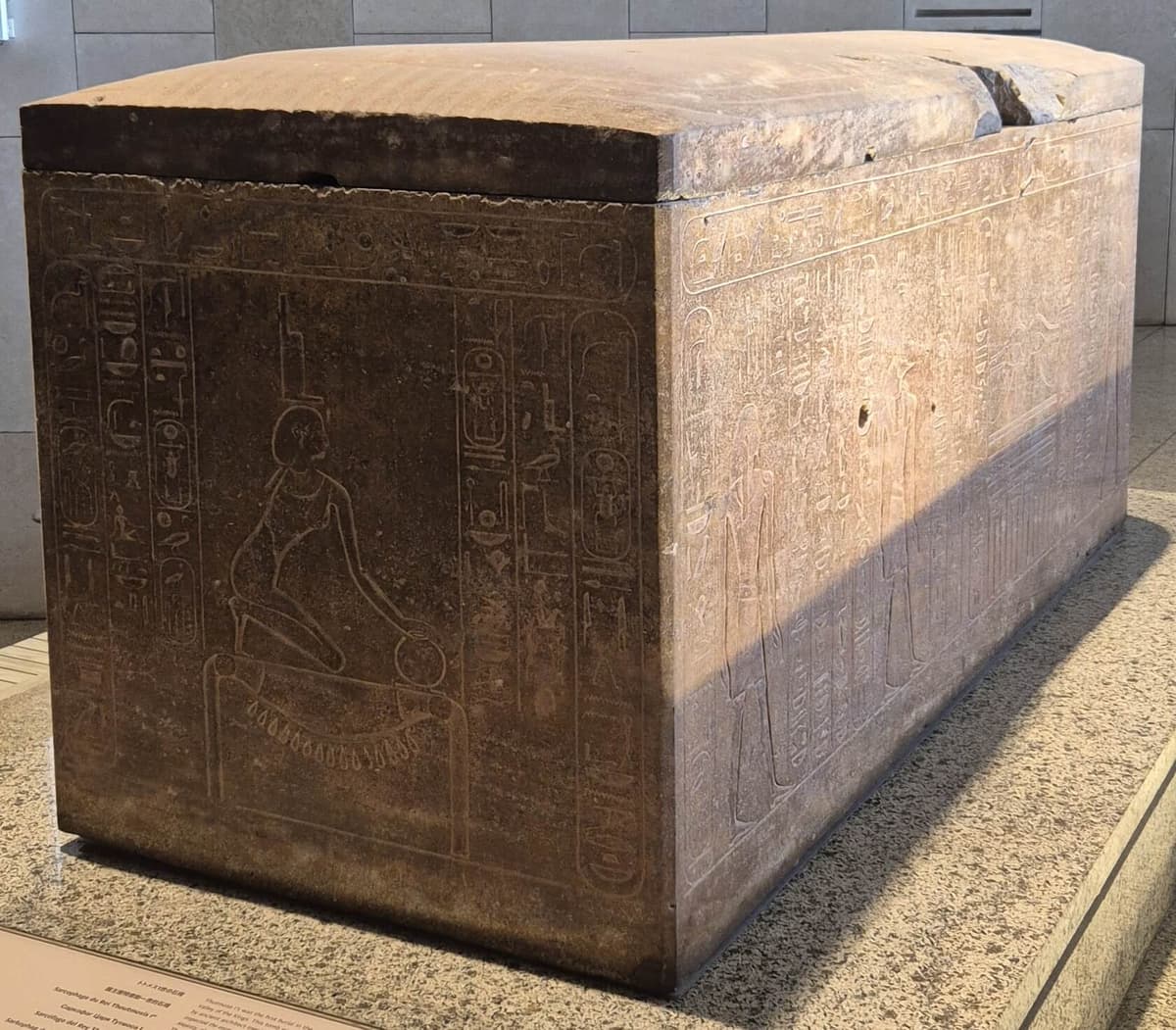
This sarcophagus belonged to King Thutmose I, one of the early rulers of the 18th Dynasty. He was a powerful pharaoh who expanded Egypt’s influence deep into Nubia and Syria. His tomb is significant for being the first royal tomb ever built in the Valley of the Kings, marking a turning point in royal funerary practices.
The famed architect Ineni, who served Thutmose I, proudly wrote in his autobiography that he had carved the king’s tomb “alone, without anyone seeing or hearing.” Yet despite his pride, the tomb’s exact location remains unknown to this day. It is thought to be among the earliest hidden royal tombs in the valley, designed to thwart tomb robbers.
Interestingly, the sarcophagus seen here was reused later. It was reclaimed by his grandson, King Thutmose III, who had it placed in KV38, a new tomb built specifically for reburial. This reuse reflects a practical approach during the New Kingdom: instead of creating new burial furniture, rulers sometimes honored their ancestors by restoring and relocating their burial items.
Today, this granite sarcophagus stands as a symbol of Egypt’s evolving royal burial customs and of Thutmose I’s lasting legacy in Egypt’s architectural and imperial expansion.This sarcophagus belonged to King Thutmose I, one of the early rulers of the 18th Dynasty. He was a powerful pharaoh who expanded Egypt’s influence deep into Nubia and Syria. His tomb is significant for being the first royal tomb ever built in the Valley of the Kings, marking a turning point in royal funerary practices.
The famed architect Ineni, who served Thutmose I, proudly wrote in his autobiography that he had carved the king’s tomb “alone, without anyone seeing or hearing.” Yet ... اكتشف المزيد مع البريميوم!
اكتشف القصة الكاملة لهذا الأثرقم بالترقية للبريميوم للوصول إلى الوصف الكامل، الأدلة الصوتية، والمحتوى الحصري لجميع القطع الأثرية.استمتع بالوصول الكامل إلى الأدلة الصوتية والوصف المفصل والمساعد الصوتي للجولات لأهم القطع الأثرية في المتحف الكبير بسعر 3.99 دولار