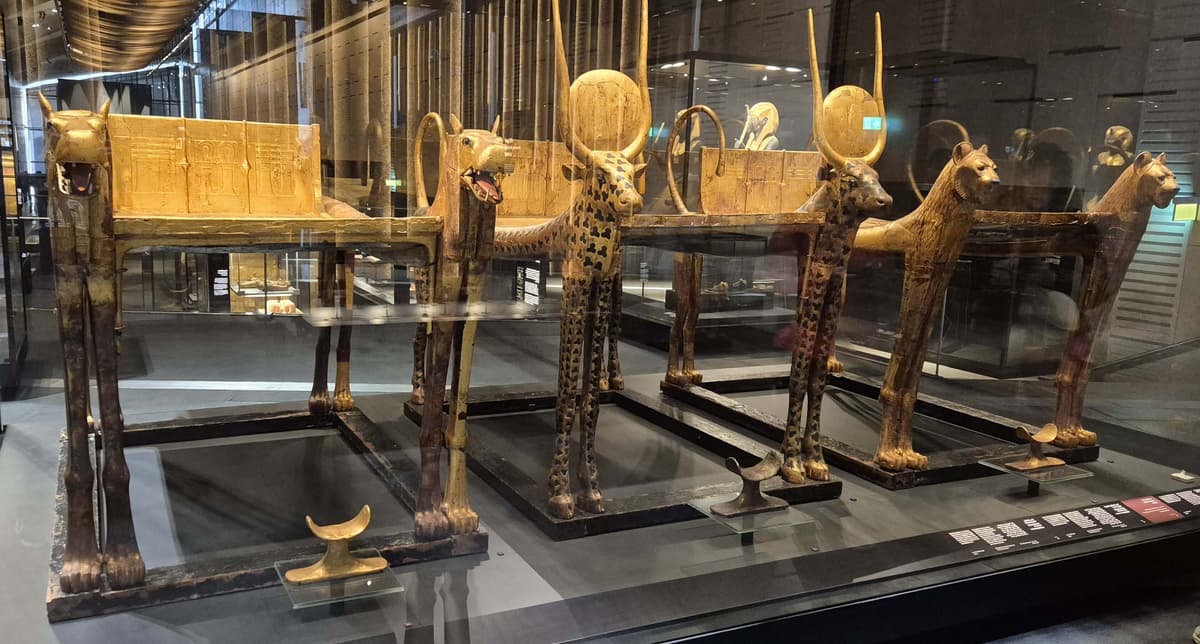
The funerary couches and golden headrests from the tomb of Tutankhamun are among the most fascinating ritual objects discovered during the excavation of the young king’s burial. These objects were found in the antechamber of the tomb and played an important symbolic role in the funerary rituals that prepared the king for the afterlife.
The funerary couches were designed as sacred beds used during burial ceremonies. They were carved from wood and decorated with gold, glass, and other precious materials. Each couch represents a powerful divine creature connected with protection, rebirth, and the cosmic order of the ancient Egyptian universe.
One couch is shaped in the form of Ammut, a terrifying creature from Egyptian mythology. Ammut had the head of a crocodile, the body of a lion, and the hindquarters of a hippopotamus. In Egyptian belief, Ammut was known as the Devourer of the Dead. During the judgment of the dead, a person’s heart was weighed against the feather of truth by the god Ma'at. If the heart was found to be impure, Ammut would consume it, preventing the soul from entering eternal life.
Another couch represents Mehet-Weret, an ancient cosmic cow goddess associated with the sky and the waters of creation. In Egyptian mythology she was connected with the primeval flood from which the world emerged. She was sometimes described as the mother of the sun god and symbolized the birth of light and the renewal of life.
A third couch is linked with Isis, one of the most important goddesses in Egyptian religion. Isis was the goddess of magic, motherhood, and protection. She was famous for her role in resurrecting her husband Osiris after his death. Because of this association, Isis became a powerful symbol of rebirth and eternal life for the deceased.
Alongside these couches were golden headrests, which served both practical and symbolic purposes. In life, Egyptians used headrests instead of pillows while sleeping. In burial, they supported the head of the mummy and symbolized awakening and rebirth in the afterlife. The curved design helped protect the head while also allowing the deceased to rise again in the next world.
The presence of these couches and headrests demonstrates the complex religious beliefs that surrounded death in ancient Egypt. The Egyptians believed that proper preparation of the body and the use of sacred objects would ensure the safe passage of the soul into the afterlife.
More than three thousand years after they were placed in the tomb, these objects still reveal the extraordinary craftsmanship and deep spiritual symbolism of ancient Egyptian funerary traditions.The funerary couches and golden headrests from the tomb of Tutankhamun are among the most fascinating ritual objects discovered during the excavation of the young king’s burial. These objects were found in the antechamber of the tomb and played an important symbolic role in the funerary rituals that prepared the king for the afterlife.
The funerary couches were designed as sacred beds used during burial ceremonies. They were carved from wood and decorated with gold, glass, and other precious materials. Each couch represents a powerful divine creature connected with protection, rebirth, and the cosmic order of the ancient Egyptian universe.
One couch is shaped in the form of Ammut, a terrifying creature from Egyptian mythology. Ammut had the head of a crocodile, the body of a lion, and the hindquarters of a hippopotamus. In Egyptian belief, Ammut was known as the Devourer of the Dead. During the judgment of the dead, a person’s heart was weighed against the feather of truth by the god Ma'at. If the heart was found to be impure, Ammut would ... اكتشف المزيد مع البريميوم!
اكتشف القصة الكاملة لهذا الأثرقم بالترقية للبريميوم للوصول إلى الوصف الكامل، الأدلة الصوتية، والمحتوى الحصري لجميع القطع الأثرية.استمتع بالوصول الكامل إلى الأدلة الصوتية والوصف المفصل والمساعد الصوتي للجولات لأهم القطع الأثرية في المتحف الكبير بسعر 3.99 دولار