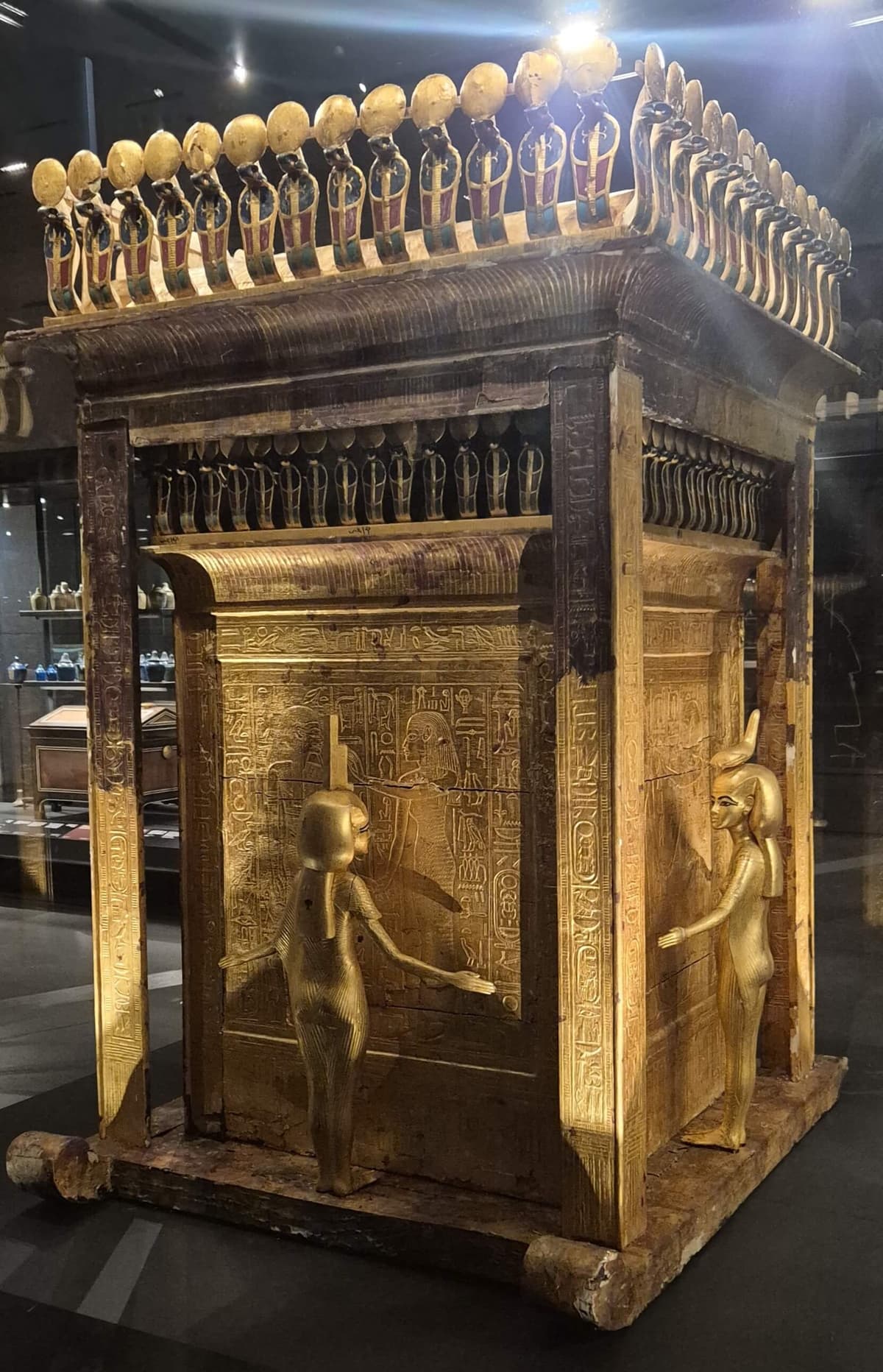
The Gilded Canopic Shrine on Sledge is one of the most important ritual objects discovered in the tomb of Tutankhamun, the young king who ruled Egypt during the 18th Dynasty of the New Kingdom around 1332 to 1323 BCE. This magnificent shrine formed part of the complex burial equipment designed to protect the king’s body and ensure his successful journey into the afterlife. It was discovered in 1922 by the British archaeologist Howard Carter inside the king’s tomb in the Valley of the Kings.
The shrine stood within the burial chamber of the tomb and was placed on a ceremonial wooden sledge. In ancient Egyptian funerary rituals, sledges were often used to transport sacred objects during burial ceremonies. Even after burial, the symbolic presence of the sledge suggested movement and ritual procession, emphasizing the king’s transition from the world of the living to the eternal realm of the gods.
Inside this shrine was a canopic chest containing four compartments that held the internal organs of the deceased king. During the process of mummification, the lungs, liver, stomach, and intestines were removed from the body and carefully preserved. These organs were protected because the ancient Egyptians believed they would be needed again in the afterlife.
The protection of these organs was entrusted to the Four Sons of Horus, divine guardians who watched over the canopic containers. These deities were closely associated with major protective goddesses. The shrine itself is guarded by the powerful goddesses Isis, Nephthys, Neith, and Selket. These goddesses are depicted spreading their protective arms around the shrine, symbolically embracing and safeguarding the king.
The exterior of the shrine is richly decorated with gold and scenes of divine protection. Along the top edge runs a frieze of sacred cobras known as uraei. In ancient Egyptian belief the cobra symbolized royal authority and divine power. The repeated image of the cobra created a magical barrier intended to defend the shrine against any hostile forces in the afterlife.
The shrine was constructed from wood and then covered with layers of gesso and gold leaf. Additional decoration included copper, glass, and faience inlays. The use of gold had deep religious meaning because the ancient Egyptians believed that gold was the flesh of the gods and a material associated with eternity.
Objects like this shrine demonstrate the extraordinary care that ancient Egyptians invested in royal burials. Every detail was intended to preserve the king’s body and protect his spirit for eternity. More than three thousand years later, the shrine still reflects the remarkable craftsmanship and deep spiritual beliefs that defined ancient Egyptian civilization.The Gilded Canopic Shrine on Sledge is one of the most important ritual objects discovered in the tomb of Tutankhamun, the young king who ruled Egypt during the 18th Dynasty of the New Kingdom around 1332 to 1323 BCE. This magnificent shrine formed part of the complex burial equipment designed to protect the king’s body and ensure his successful journey into the afterlife. It was discovered in 1922 by the British archaeologist Howard Carter inside the king’s tomb in the Valley of the Kings.
The shrine stood within the burial chamber of the tomb and was placed on a ceremonial wooden sledge. In ancient Egyptian funerary rituals, sledges were often used to transport sacred objects during burial ceremonies. Even after burial, the symbolic presence of the sledge suggested movement and ritual procession, emphasizing the king’s transition from the world of the living to the eternal realm of the gods.
Inside this shrine was a canopic chest containing four compartments that held the internal organs of the deceased king. During the process of mummification, the lungs, liver, stomach, and i ... اكتشف المزيد مع البريميوم!
اكتشف القصة الكاملة لهذا الأثرقم بالترقية للبريميوم للوصول إلى الوصف الكامل، الأدلة الصوتية، والمحتوى الحصري لجميع القطع الأثرية.استمتع بالوصول الكامل إلى الأدلة الصوتية والوصف المفصل والمساعد الصوتي للجولات لأهم القطع الأثرية في المتحف الكبير بسعر 3.99 دولار